Research
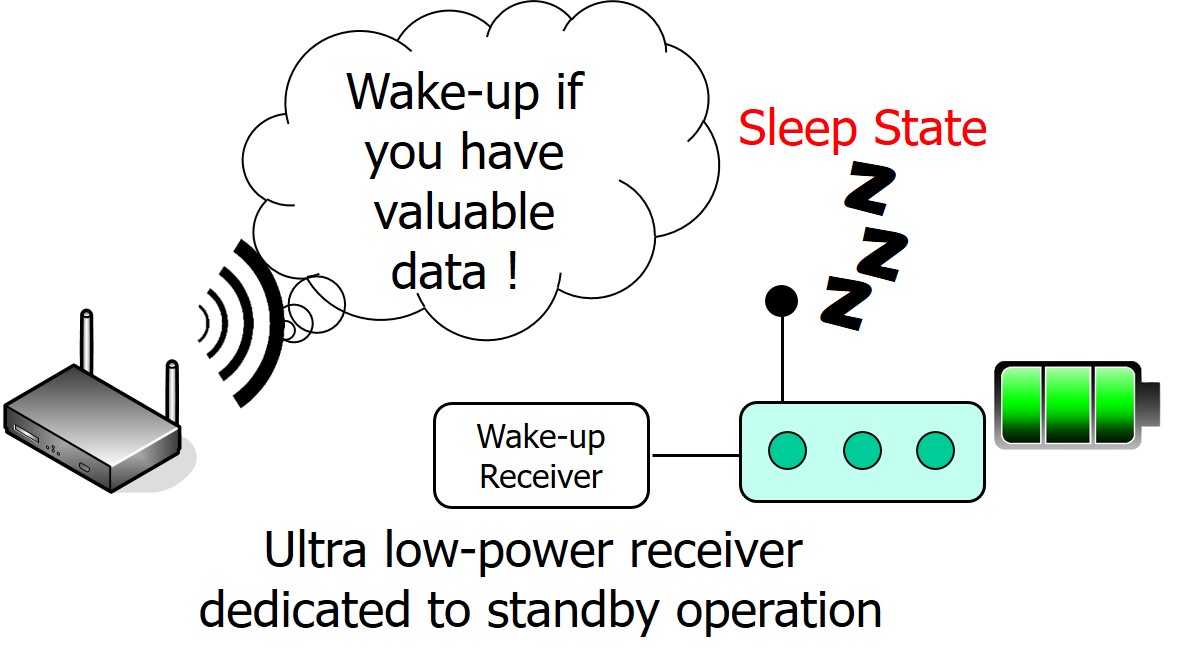
Energy-Efficient Wireless IoT Networks
Many IoT devices, such as wireless sensors, operate with batteries, so extending battery life is a major challenge. We are developing data-oriented power-saving control that uses wake-up control to selectively activate only those devices, among large numbers of sleeping IoT devices, that hold the valuable data. By combining this with energy harvesting technologies, we aim to spend precious radio resources (spectrum and energy) only on collecting truly necessary data.
Wireless Sensing
The propagation of radio waves emitted by the many wireless devices (for example, fluctuations in the radio signal) changes depending on where the devices are placed and on people’s positions, postures, and activities. In other words, by observing radio propagation, we can infer not only where devices are located and whether people are present, but also their postures and activities. Our lab combines the propagation characteristics of Wi-Fi and Bluetooth signals with machine learning to estimate the states of the various objects and people around us.
Swarm Mobile Sensing
We study swarm mobile sensing, in which many robots cooperate through wireless communication and move together like a swarm. In particular, we investigate swarm mobility control that controls the swarm while ensuring efficient movement and reliable communication paths. Our goal is to enable rapid search for disaster victims and resources even in harsh environments that people cannot reach, such as disaster sites and the lunar surface.

6G Communications (Semantic Communication and Digital Twins)
With the explosive growth of mobile data devices, future 6G systems will need to send and receive only information that is truly meaningful and fresh. We are working on semantic communication, which uses AI to extract and transmit only the meaningful information in images, and on communication protocols for digital twins, which recreate the real world (physical space) inside computers (cyber space).
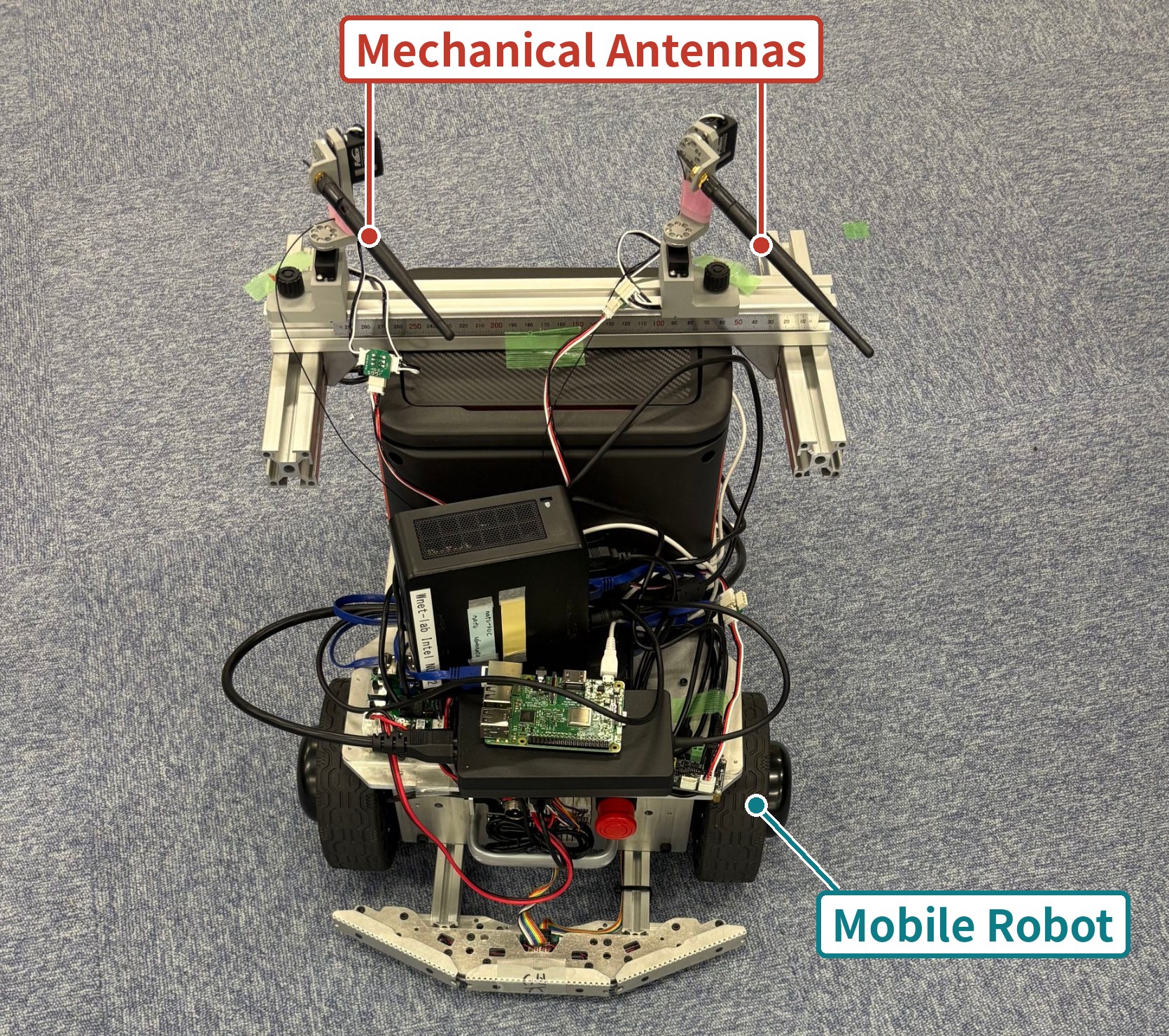
Mechanical Antennas
We study how to control the radio propagation environment, including fading and polarization, by mechanically moving the antennas of wireless systems such as Wi-Fi. We are developing techniques that mount mechanical antennas on mobile robots to search for positions where communication quality with the peers improves, as well as techniques that move antennas to improve the accuracy of wireless sensing.
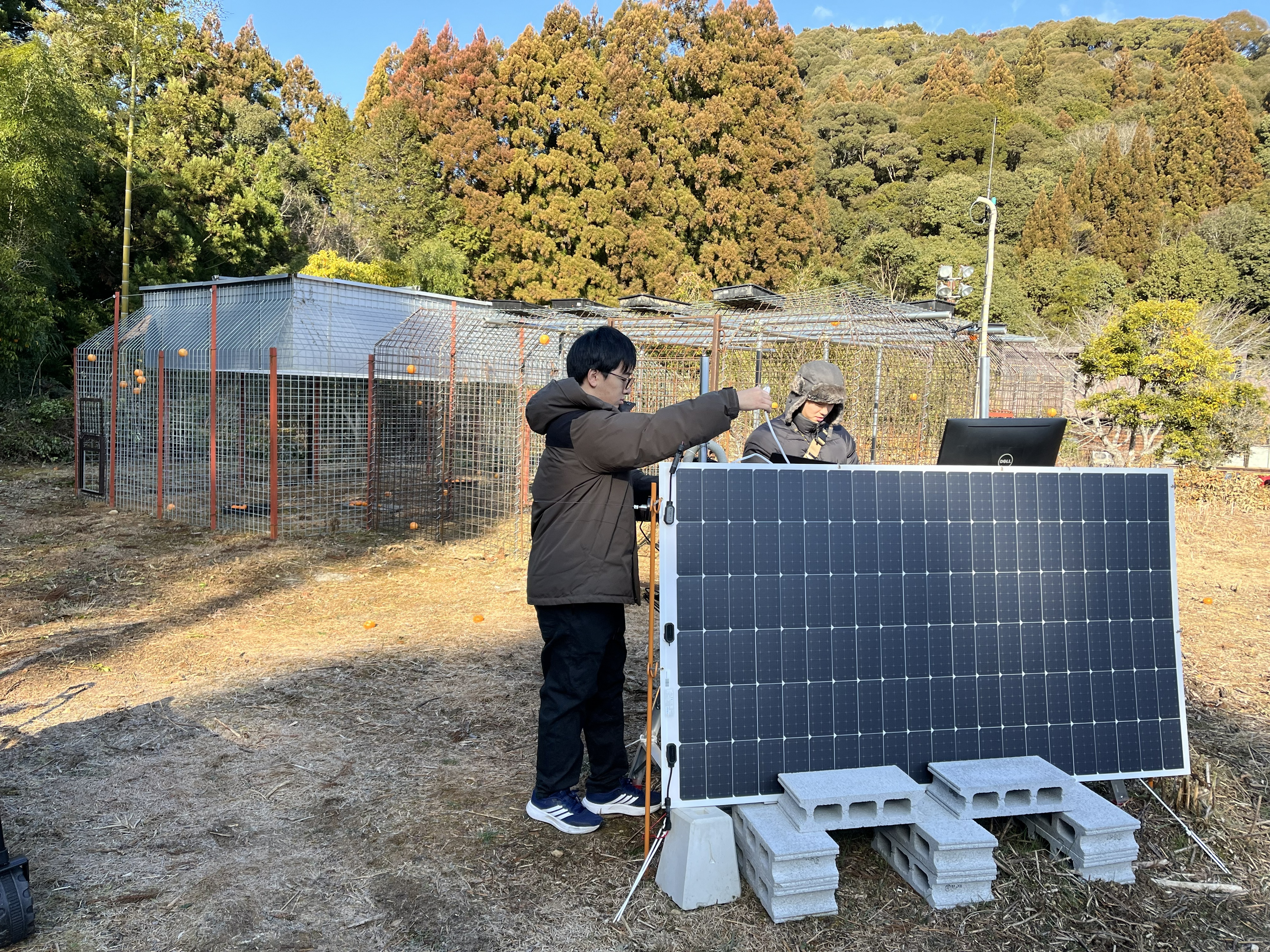
IoT Systems for Wildlife Monitoring
Crop damage caused by wild animals has become a serious regional problem, and many local governments are strengthening wide-area capture programs. However, manual capture has its limits due to the shrinking and aging pool of trappers and the increase in abandoned farmland caused by depopulation. We are therefore developing IoT and wireless systems for monitoring and controlling traps such as capture cages, as well as systems for detecting wild animals and sending alerts in forested areas.